
How Aerospace Actuation is Evolving
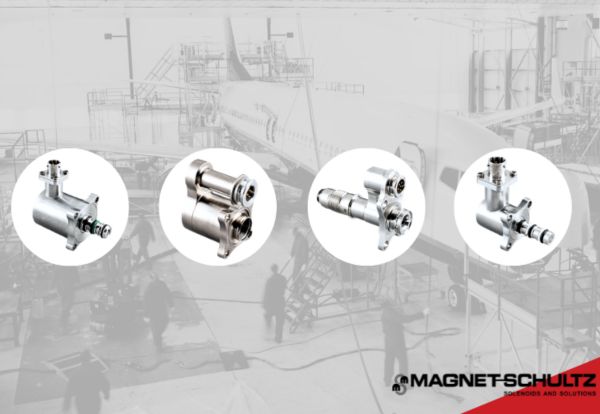
Actuation in Modern Aircraft
Modern aircraft are being asked to do more than ever before. They must be lighter, more efficient, increasingly connected and capable of meeting demanding safety, performance and sustainability requirements. Behind many of these advances is a process that often goes unnoticed: actuation.
The Shift Towards Smarter Aircraft
From controlling hydraulic systems and regulating fluid flow to monitoring critical functions and enabling precise mechanical movement, actuation plays a vital role in modern aerospace platforms. As aircraft architectures become more sophisticated, individual components are no longer expected to perform in isolation. They must support wider goals such as integration, diagnostics, maintainability and operational efficiency.
Precision and Reliability
This is driving demand for technologies that deliver precise, repeatable performance while integrating seamlessly into complex control systems. Components such as control solenoids, solenoid valves, hydraulic valves and sensors are becoming increasingly important in helping aircraft systems operate accurately and reliably throughout their service life.
Aerospace environments place extreme demands on these components. Temperature changes, vibration, pressure variations and continuous operating cycles mean that even small deviations in performance can have serious consequences.
Looking Ahead
The future of aerospace actuation will be shaped by greater automation, increasing system complexity, weight reduction targets and the need for uncompromising reliability. For aerospace engineers, actuation is no longer simply about movement or control. It is becoming a key enabler of smarter, safer and more efficient aircraft.
To find out more about Magnet-Schultz, visit: www.magnetschultz.co.uk