
Redefining What a Tooling Partner Should Deliver
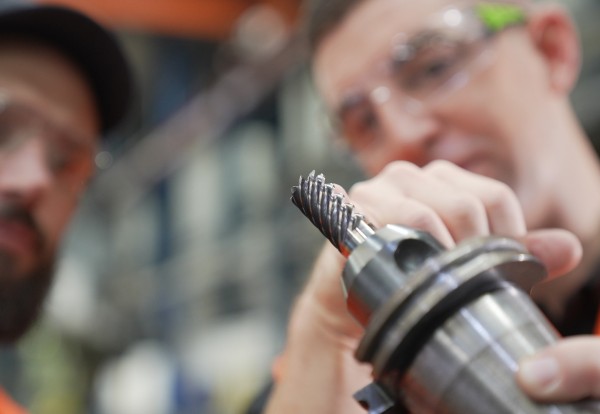
Why manufacturers need tooling partners focused on performance, evidence and support rather than just supply.
UK manufacturing continues to operate under increasing pressure. Global competition, rising material costs, tighter tolerances and the drive for greater efficiency mean that every decision on the shop floor matters. In this environment, the role of a tooling partner has evolved well beyond supplying cutting tools.
Today, manufacturers require partners who can contribute to performance, reliability, and measurable outcomes, not just product availability.
From supply to performance support
Traditionally, tooling distribution focused on responsiveness: holding stock, fulfilling urgent orders and ensuring reliable delivery. While this remains important, it is no longer enough.
Modern manufacturing environments are more complex than ever, involving:
- Multi-axis machining and high-mix production
- Difficult materials and composites
- Just-in-time scheduling with minimal tolerance for disruption
- Increased pressure on cost-per-part and process stability
As a result, manufacturers increasingly look for support that goes beyond reactive supply. They need insight, consistency and accountability – particularly where tooling performance has a direct impact on productivity and quality.
Engineering insight that turns tools into outcomes
A cutting tool’s performance is determined by how it is applied, not just by its design.
Feed rates, speeds, engagement strategies, coolant delivery, toolpath selection and workholding all influence tool life, surface finish and cycle time. Small changes in these variables can have a significant impact on production efficiency.
Helix engineers work closely with customers to understand the full machining context before making recommendations. This includes assessing:
- Machine capability
- Material behaviour and variation
- Cutting strategy
- Coolant application and chip control
- Process consistency and repeatability
By analysing the whole process rather than individual components, opportunities for improvement are identified at the root cause level. In many cases, meaningful gains are achieved without additional capital investment – simply by optimising how existing tools and machines are used.
Making decisions based on evidence
Tooling decisions should be based on proof, not assumption.
Where possible, Helix supports customers with measurable before-and-after data, including:
- Tool life comparisons
- Cycle time changes
- Scrap and rework reduction
- Cost-per-part impact
This approach allows manufacturing and procurement teams to make informed decisions with confidence, knowing that improvements are supported by real-world results.
Across a range of applications, customers often see:
- Extended tool life
- Reduced cycle times
- Improved process stability
- Lower overall tooling costs
More importantly, these improvements are repeatable and defensible, not dependent on short-term trials or isolated success.
The value of local, responsive support
In a production environment, delays are costly. Unplanned tool failures or process instability can quickly lead to downtime, missed deadlines, and increased costs.
Helix operates from regional locations across the North of England, enabling:
- Fast access to tooling and technical support
- On-site assistance when issues arise
- Practical, face-to-face collaboration with engineers who understand the operation
Local presence reduces response time and improves communication, but it also builds stronger working relationships. Over time, this allows for a more proactive approach – addressing potential issues before they affect production.
Smarter approaches to tooling supply
Effective tooling support is not just about selection – it is also about availability and control.
Many manufacturers benefit from structured approaches such as:
- Tool vending and inventory management
- Consignment stock
- Usage analysis and replenishment planning
These systems help reduce downtime, improve visibility and ensure that critical tools are available when needed, without excessive stockholding or manual intervention.
When aligned with production requirements, smarter tooling supply supports efficiency rather than adding complexity.
Conclusion
The demands placed on UK manufacturers continue to increase. In response, the expectations of tooling partners have changed.
Today’s most effective partnerships are built on:
- Technical understanding of real machining challenges
- Evidence-based recommendations
- Reliable, responsive support
- A focus on measurable outcomes
Tooling is no longer just a consumable. When supported properly, it becomes a lever for improving productivity, stability and cost-per-part.
For manufacturers looking to remain competitive, the question is no longer just what tool is being used – but how that tool is supported, applied and optimised within the process as a whole.
FOR MORE INFO VISIT: www.helixtools.co.uk